Hello! Welcome to your next lesson.
In our previous session, we established the broad framework for communicating with Those Charged with Governance (TCWG) under SA 260. We learned that the auditor must share significant findings to facilitate a robust, two-way dialogue. Today, we'll do a deep dive into one of the most critical categories of those findings: deficiencies in internal control.
This lesson is dedicated to SA 265, "Communicating Deficiencies in Internal Control to Those Charged with Governance and Management." This standard is a direct follow-on from SA 260, providing specific rules for a specific type of communication. Understanding this standard is crucial because it links your work on risk assessment (SA 315) and response (SA 330) directly to your reporting and communication responsibilities. For your exams, being able to precisely define and explain the communication process for these deficiencies is essential.
By the end of this 60-minute lesson, you will be able to: Define 'significant deficiency in internal control' and describe the auditor's responsibility to communicate such deficiencies to management and TCWG.
Let's begin.

1. The Auditor's Role: A Crucial Clarification
Before we get into the definitions, it's vital to clarify the context. Your primary objective as an auditor is to express an opinion on the financial statements, not on the effectiveness of the entity's internal controls.
You identify deficiencies in internal control as a by-product of your audit procedures—specifically, when you are obtaining an understanding of the entity's controls (as per SA 315) and testing their effectiveness (as per SA 330). SA 265 does not require you to perform extra work to find deficiencies; it simply dictates your responsibility for the ones you happen to find during your normal audit process.
SA 265' "Communicating Deficiencies In Internal Control to TCWG and Management" By @CAJyotiGarg
To start, let's watch a short clip that clearly explains this context. It's important to understand that identifying control deficiencies is incidental to the main audit objective.
Watch the first 2 minutes and 33 seconds of this video by CA Jyoti Garg. Focus on her explanation that the auditor's main job is the financial statement audit, and reporting control deficiencies is a result of that work, not a separate objective.
2. Defining Deficiencies: The Official Language
Your ability to use precise technical language is critical. SA 265 provides two key definitions that you must know.
[PDF] SA 265 – Communication Deficiencies in Internal Control to Those ...
Let's turn to the official ICAI material to get the exact definitions. Mastering these is the first step to answering any exam question on this topic.
Please read the section titled 'Definitions' (page 5). Focus on the definitions provided for: Deficiency in internal control Significant deficiency in internal control Pay close attention to the wording. A 'deficiency' can be a control that is poorly designed/operated, or a control that is completely missing.
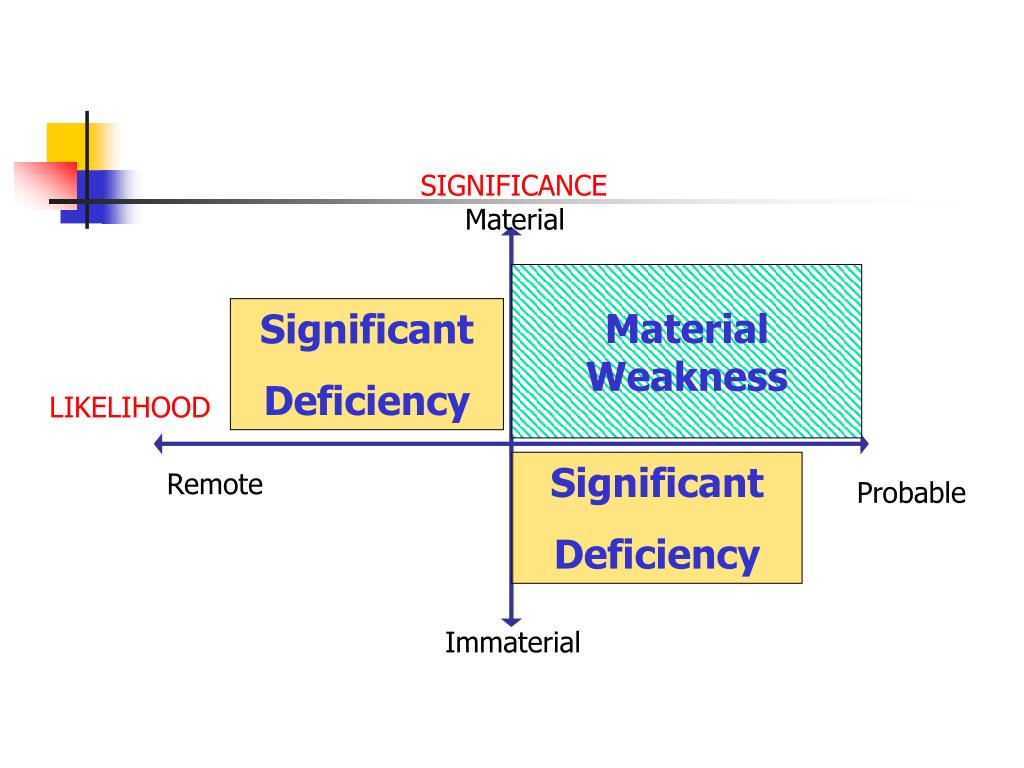
As you can see, the key distinction is that a significant deficiency is a deficiency (or combination of them) that, in your professional judgment, is important enough to require the attention of TCWG.
So, how do you exercise that judgment? It boils down to two factors:
- Likelihood: How probable is it that a misstatement could occur because of this deficiency?
- Magnitude: If a misstatement did occur, how material could it potentially be?
A deficiency doesn't need to have already caused a misstatement to be considered significant. The potential for a material misstatement is what matters.
3. Spotting a Significant Deficiency: Indicators and Examples
Knowing the definition is one thing; applying it is another. SA 265 provides indicators to help you identify situations that might point to a significant deficiency.
These indicators are your "red flags." They include things like:
- Evidence of an ineffective control environment (e.g., management override of controls).
- Absence of a risk assessment process where one is clearly needed.
- Misstatements that you, the auditor, discovered, which were not prevented or detected by the entity's own controls.
- Failure by management to fix significant deficiencies that were communicated in previous audits.
SA 265 Revision | CA Final Audit | CA Shubham Keswani (AIR 8)
Memorizing a list of indicators can be tough. This video from CA Shubham Keswani uses some clever mnemonics to make them easier to recall and provides excellent practical examples.
Please watch from 03:48 to 07:35. Focus on: The mnemonic 'CAFÉ' and 'RAP' for remembering the indicators of a significant deficiency (e.g., ineffective risk assessment process, prior period misstatements). The examples of significant deficiencies, such as issues with controls over related party transactions or the period-end financial reporting process. Think of these mnemonics as tools to help you structure your answer around the formal points in the standard.
4. The Auditor's Responsibility: What, to Whom, and How?
Once you've identified deficiencies, SA 265 is very clear about your communication responsibilities. This process ensures that the right people are informed so they can take corrective action.
Who to Communicate With?
The standard makes a clear distinction between what you tell TCWG and what you tell Management.
-
To Those Charged with Governance (TCWG):
- You must communicate all significant deficiencies in writing. This formalizes the communication and underscores its importance for their oversight role.
-
To Management:
- You must also communicate the same significant deficiencies to management (usually in writing as well).
- Additionally, you must communicate other deficiencies that are not significant but, in your judgment, are important enough to merit management's attention. This communication can be oral.
The logic here is that TCWG need to focus on the major issues affecting their oversight, while operational management can benefit from knowing about even minor issues that they can fix.
What to Include in the Written Communication?
For the significant deficiencies communicated in writing to TCWG and management, SA 265 requires specific content. This is a very common exam topic.
[PDF] SA 265 – Communication Deficiencies in Internal Control to Those ...
Let's review the exact requirements for the content of your written communication from the ICAI's official text.
Please read the section titled 'Requirements' on page 6. This short section details the two crucial components that must be included in your written communication.
As the text specifies, your communication must include:
- A description of the deficiencies and an explanation of their potential effects. You don't need to quantify the effect, but you must explain the risk (e.g., "This lack of segregation of duties could lead to unauthorized transactions and potential fraud.").
- Sufficient information to provide context. This is a critical disclaimer. You must explain that:
- The audit's purpose was to opine on the financial statements, not on internal controls.
- You only considered controls relevant to the audit.
- You are only reporting the deficiencies you identified during the audit, and there may be others.
SA 265' "Communicating Deficiencies In Internal Control to TCWG and Management" By @CAJyotiGarg
The following video explains the purpose and content of this communication letter very clearly, especially the importance of the disclaimer.
Watch this clip from 04:34 to 07:42. CA Jyoti Garg does a great job of explaining what goes into the letter to TCWG/Management and why you include the disclaimer about the scope of your work.
When to Communicate?
Communication must be on a timely basis. For listed entities, this generally means communicating significant deficiencies to TCWG before the date of approval of the financial statements, as they may have their own regulatory reporting responsibilities related to internal control.
Conclusion
Mastering SA 265 is about understanding a precise, logical process. It's not about finding every flaw, but about professionally judging the flaws you do find and communicating them effectively to the right people. This protects the integrity of the financial reporting process and helps the entity strengthen its own governance.
Key Takeaways:
- Deficiency vs. Significant Deficiency: A deficiency is a weakness in control. A significant deficiency is a deficiency (or combination) that you judge to be important enough to bring to the attention of TCWG, based on the likelihood and potential magnitude of misstatement.
- Auditor's Role: You report deficiencies identified during your financial statement audit; you are not required to conduct an audit of internal control.
- Communication Pathway:
- Significant Deficiencies: Communicate in writing to both TCWG and management.
- Other Deficiencies: Communicate to management (can be oral).
- Content of Written Communication: Must include a description of the deficiency, its potential effects, and crucial context explaining the limitations of your work regarding internal controls.
Preview of the Next Lesson
We have now covered communication with TCWG in general (SA 260) and specifically regarding internal control deficiencies (SA 265). In our next lesson, we will continue this theme by looking at another specialized area. We will discuss SA 250, where you will learn to: Distinguish between laws/regulations with a direct vs. indirect effect on financial statements and understand the auditor's responsibilities.