Introduction
Welcome to the final lesson of your course. Over the past ten modules, we have built a comprehensive theoretical and methodological foundation for your PhD research. In the last few lessons, you have articulated your research question, justified a theoretical framework blending phenomenology and postcolonial theory, and proposed a primary corpus of Moroccan films. You now have all the essential components of your research design.
Today, we will assemble these components into a coherent architectural plan. The learning outcome for this lesson is to draft a high-level chapter structure for the proposed dissertation. This structure is more than a table of contents; it is the blueprint for your entire project, outlining the logical progression of your argument from the initial problem to your final conclusions. For your specific project, which is analytical and interpretive rather than empirical, we will focus on an argument-driven structure common in the humanities.
By the end of this lesson, you will have a clear model for organizing your dissertation and a template for writing the "Overview of Chapters" section of your PhD proposal.
1. Empirical vs. Argument-Driven Dissertation Structures
Most advice on dissertation structure assumes an empirical research project, often following the IMRD model: Introduction, Methodology, Results, and Discussion. This model is common in the social and natural sciences where new data is collected and analyzed.

Your project, however, is not empirical in this sense. You are not conducting surveys or experiments. Instead, your "data" consists of films and theoretical texts, and your "analysis" is a critical argument you will build through close reading and theoretical application. This calls for a different approach.
For a deeper understanding of the distinction, let's watch a video that specifically addresses the structure of a literature-based (or non-empirical) dissertation.
Literature based dissertation - How to structure it and ensure it's critical and analytical
The video 'Literature based dissertation' by Degree Doctor is an excellent resource that explains why forcing an argument-driven project into an empirical structure can be problematic and outlines a more appropriate alternative.
Please watch the first two sections (00:00:52 - 00:03:32). Focus on the definition of a literature-based dissertation and the key point about avoiding a 'weird hybrid' structure. This will help frame our approach to your own dissertation.
The key takeaway is that your dissertation's structure should reflect the nature of your research. Instead of separating methods, results, and discussion, an argument-driven dissertation integrates them into a series of thematically organized chapters that build upon one another.
2. The Anatomy of an Argument-Driven Dissertation
A non-empirical dissertation in the humanities typically consists of an introduction, a series of thematic body chapters, and a conclusion. Let's break down what each part does, drawing on some excellent academic guidelines.
The document below, from a professor who has supervised many dissertations, offers a particularly useful section on the structure of non-empirical studies.
[PDF] Kathy Hytten, Research Proposal and Dissertation Guidelines
The document 'Research Proposal and Dissertation Guidelines' by Kathy Hytten provides a detailed and practical guide. We will focus on the section specifically addressing non-empirical research, which is directly relevant to your project.
Please read the section titled 'Notes on Non-Empirical Studies.' It clearly outlines how the chapters in a theoretical or analytical dissertation function. Note the emphasis on the introduction setting up the project and the middle chapters each being dedicated to 'building a different aspect of your argument.'
Based on these principles, let's outline the core components:
- Chapter 1: Introduction. This is the most crucial chapter of your proposal. It doesn't just introduce the topic; it lays out the entire research design. It establishes the problem, states your research question, explains the project's significance, introduces your theoretical framework and film corpus, and provides a "roadmap" outlining the structure of the subsequent chapters.
- Body Chapters (e.g., Ch. 2-4). These are the heart of your dissertation. Rather than a single "Literature Review" chapter, you will weave literature and film analysis together throughout. Each chapter is a self-contained essay that advances one part of your overall argument. They are organized thematically, not chronologically or film-by-film.
- Final Chapter: Conclusion. This chapter synthesizes the arguments made in the body chapters. It explicitly answers your main research question, discusses the broader implications of your findings for film sound studies and Moroccan cultural studies, acknowledges the limitations of your work, and suggests avenues for future research.
This structure allows you to construct a complex, multi-faceted argument logically and persuasively.
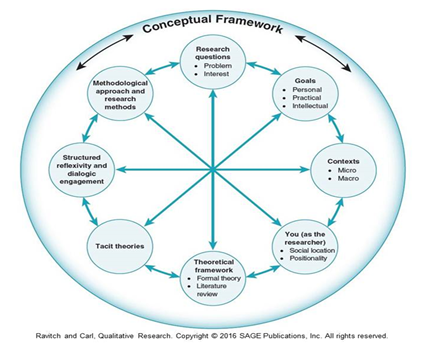
3. A Proposed Structure for Your Dissertation
Now, let's translate this abstract model into a concrete, high-level structure for your dissertation on soundscapes in Moroccan cinema. This is a possible five-chapter model that aligns with your research goals and the four pillars you identified (Production, Perception, Immersion, Cultural Identity).
Chapter 1: Introduction: Hearing Moroccan Cinema
- Problem Statement: The soundscapes of Moroccan cinema remain an under-theorized field, often overlooked in favor of visual analysis or treated without accounting for cultural specificity.
- Research Question: How do Moroccan filmmakers utilize the soundscape—encompassing ambient sound, music, and language—to mediate cultural identity, negotiate postcolonial modernity, and shape the viewer's immersive experience?
- Theoretical Framework: Introduction to the synthesis of phenomenology (Sobchack) and postcolonial sound studies (inspired by Limbrick, Aubry) that will guide the analysis.
- Corpus and Methodology: Introduction to the primary film corpus and the methodology of audiovisual analysis/close listening.
- Significance: Why this research matters for film studies, sound studies, and Middle Eastern & North African studies.
- Overview of Chapters: A roadmap of the dissertation's argument.
Chapter 2: Theoretical Foundations: Postcolonial Phenomenology and the 'Sawt'
- This chapter establishes the detailed theoretical and methodological toolkit for the dissertation.
- Part 1 (Phenomenology): A deep dive into Vivian Sobchack's "carnal eye" and its application to the "carnal ear." How does film sound produce an embodied, sensory experience?
- Part 2 (Postcolonial Sound Studies): A critical engagement with soundscape theory (Schafer, Truax) and its postcolonial critiques. Introduction of key concepts like 'sonic pluralism' (Aubry) and the Arabic concept of sawt (voice/sound/vote) to frame the analysis of the Moroccan context.
- Part 3 (Methodology): Outlining the specific method of audiovisual analysis, combining Chion's listening modes with the framework developed in parts 1 and 2.
Chapter 3: Sounding the Nation: Place, History, and Cultural Identity
- This chapter analyzes how sound is used to construct and contest notions of place and national identity, directly addressing your "Cultural Identity" pillar.
- It could analyze scenes from films like Transes or El Chergui to explore the sonic representation of tradition vs. modernity.
- It would examine how language choice (Darija, Amazigh, French), regional music, and the ambient sounds of the city (e.g., the medina) or countryside are used to create sonic markers of identity.
Chapter 4: The Architecture of Immersion: Production, Perception, and Filmic Space
- This chapter provides the fine-grained analysis of how sonic worlds are built and perceived, covering your pillars of "Production," "Perception," and "Immersion."
- Using case studies from your contemporary corpus (e.g., Casablanca Beats, The Unknown Saint), it would analyze specific production techniques (e.g., sound design, mixing, 'worldizing').
- It would connect these technical choices to psychoacoustic principles (e.g., Auditory Scene Analysis) to show how filmmakers guide audience attention and create immersive, embodied experiences. For example, how does the chaotic mix of a Casablanca street in one film contrast with the stark, minimalist sound design of the desert in another?
Chapter 5: Conclusion: The Politics and Poetics of Moroccan Soundscapes
- Synthesis: Summarizes the arguments from Chapters 3 and 4, demonstrating how Moroccan filmmakers use sound to create culturally specific, phenomenologically rich experiences.
- Answering the Research Question: Provides a comprehensive answer to the central question posed in Chapter 1.
- Implications: Discusses the study's contribution. What does this analysis of Moroccan film soundscapes reveal about postcolonial cinema more broadly? How does it challenge dominant, Western-centric film sound theory?
- Future Research: Suggests new avenues of inquiry that have emerged from the research (e.g., analysis of a different genre, a focus on a specific composer or sound designer).
Conclusion: Your Dissertation Roadmap
In this final lesson, we have moved from the individual components of your research to the overarching structure that will house them. You now have a robust, argument-driven framework for your PhD dissertation.
Key Takeaways:
- Humanities dissertations typically follow an argument-driven structure, not the empirical IMRD model.
- This structure consists of an Introduction that sets up the project, thematic Body Chapters that build the argument, and a Conclusion that synthesizes the findings and discusses their implications.
- Each body chapter is a distinct essay that integrates theory, literature, and analysis of your primary sources (films).
- Your chapter structure should be a logical narrative that directly addresses your research question and reflects your theoretical commitments.
You have now completed the formal part of this course. You've journeyed from foundational theories of soundscape and film sound to advanced concepts in postcolonialism and phenomenology, culminating in a detailed plan for your own original research. You possess the intellectual toolkit to draft a compelling PhD proposal and, ultimately, to write a significant and insightful dissertation. I wish you the very best as you take these next steps and embark on this exciting research journey.