Hello! Welcome to the third and final lesson in our module, "Advanced Research Methodologies."
In our last lesson, we constructed a powerful, three-layered analytical engine by integrating soundscape theory, film sound theory, and cultural studies. We now have a blueprint for a framework that moves from describing "what" is in the soundscape, to analyzing "how" it's cinematically constructed, to interpreting "why" it matters culturally.
Today, we take the crucial final step before putting this engine to work. Our task is not to change the framework, but to argue for its existence. The learning outcome for this lesson is to justify the suitability of a constructed framework for analyzing soundscapes within Moroccan cinema. A methodology isn't just presented in a PhD; it is defended. You must prove to your committee and your readers that your chosen approach is the most rigorous, insightful, and appropriate one for your specific research question.
We will focus on four key pillars of this justification:
- Necessity: Why your complex object of study demands an integrated framework.
- Coherence: How the different theoretical parts work together synergistically.
- Specificity: How the framework is precisely tuned to the unique context of Morocco.
- Critical Stance: How it engages ethically and politically with postcolonial realities.
1. The Role and Justification of a Research Framework
Before building the argument, let's clarify what a theoretical or conceptual framework is and why its justification is so central to doctoral research. At this level, you are not just applying existing methods; you are forging your own specific lens.
To start, let's explore the distinction between conceptual and theoretical frameworks and understand their role in guiding your entire study.
Conceptual vs theoretical framework
The video 'Conceptual vs theoretical framework' from the Degree Doctor channel provides a clear introduction to these core concepts. It explains how frameworks act as a map for your research and are built upon existing theories.
Please watch the following segments: 00:33 - 01:49: Focus on the definitions and the core distinction between a conceptual framework (the structure of your specific study) and a theoretical framework (the established theories you draw upon). 04:54 - 06:56: Observe the process of selecting relevant theories from the academic literature. This is the pool from which you will draw your justification. 06:56 - 09:44: This is a crucial section. Pay close attention to how your 'research paradigm' or 'philosophical stance' (e.g., interpretivist, critical realist) influences which theories you choose. Your focus on cultural identity and postcolonial critique firmly places you within an interpretivist and critical paradigm.
As the video explains, choosing a framework is not arbitrary. It is a deliberate act that must be defended. The following video offers practical advice on how to structure this defense for a dissertation committee.
Theoretical Framework and Conceptual Framework in Your Doctoral Dissertation with Dr. Guy E. White
In 'Theoretical Framework and Conceptual Framework in Your Doctoral Dissertation,' Dr. Guy E. White gives pragmatic advice on the justification process itself.
Please watch from 05:27 to 08:15. The key takeaway here is the strategy of creating a 'menu' of possible frameworks and then arguing why your chosen one is 'just right.' This is the essence of justification: demonstrating a well-considered decision based on a comprehensive understanding of the theoretical landscape.
With this context in mind, we can now construct the specific justification for using your integrated framework to study soundscapes in Moroccan cinema.
2. Building Your Justification
Your justification is an argument constructed from several mutually reinforcing claims.
2.1. Justification by Necessity: The Complexity of Moroccan Cinema
The first step is to argue that a simple, off-the-shelf theory is insufficient. Your object of study—the soundscape of Moroccan cinema—is too complex, layered, and polyphonic for any single approach.
Peter Limbrick's research proposal on director Moumen Smihi provides a perfect articulation of this complexity. It argues against simplistic analytical models and highlights the rich tapestry of influences that a researcher must account for.
[PDF] Moroccan Director Moumen Smihi (Film Studies).pdf
Let's examine the grant proposal 'Moroccan Director Moumen Smihi'. It serves as an excellent model for framing a research problem in a way that necessitates a complex theoretical approach.
Please read these two sections carefully: 'Research and Contribution' (the first three paragraphs): Notice how Limbrick critiques reductive approaches like conventional 'auteurism' or seeing 'the Arab world' as a monolith. He emphasizes the 'extensive traffic of images and ideas' between cultures. 'Chapter Two, “The Voice of the Arabs”': This is a crucial passage. It lists the incredibly diverse sonic elements in Smihi's films: pan-Arab radio, Moroccan pop, calls to prayer, Berber songs, Chopin, etc. This list is your evidence. It proves that a framework must be able to analyze popular music, religious sound, folk traditions, and Western art music simultaneously.
Your justification begins here: you can state that, like Smihi's work, the broader cinematic soundscape of Morocco is a "polyglot and cosmopolitan" field. Therefore, a framework is needed that can integrate the environmental listening of soundscape studies (for the calls to prayer), the textual analysis of film sound theory (for the non-diegetic Chopin), and the interpretive lens of cultural studies (to understand the politics of their juxtaposition).
2.2. Justification by Coherence: A Synergistic Framework
Next, you must show that your chosen theories do not just coexist, but actively enhance one another. You can argue that each theoretical layer compensates for the limitations of the others.
The article "Hearing the Houma" is an exemplary case study of this synergistic approach in a Moroccan context.
Hearing the Houma: Sound, Vision, and Urban Space in Moroccan ...
The article 'Hearing the Houma: Sound, Vision, and Urban Space in Moroccan...' shows how an integrated framework functions in practice. It critiques one theory and uses another to strengthen its analysis.
Please read these two sections: The second paragraph of the introduction: Note how the author critiques R. Murray Schafer's original 'soundscape' concept for its 'inadequate attention to the politics of such access and social engineering.' This is a classic justification move: identifying a gap in a major theory. The fourth paragraph ('Finally, I want to propose...'): See how the author explicitly proposes to fill this gap by employing Michel Chion's 'audio-visual contract' and other sound studies scholarship. The theories are not just listed; they are put into a productive dialogue.
Your justification can follow this model. You can argue:
- Schafer's soundscape theory provides an essential vocabulary for the environmental and place-based aspects of sound, but it can be apolitical and was not designed for narrative media.
- Chion's film sound theory provides the tools for analyzing the specifically cinematic construction of sound, but it can be text-focused, de-emphasizing the sound's connection to a real-world cultural environment.
- Cultural and postcolonial studies provide the critical lens to analyze power and identity, but they require the concrete data generated by the other two theories to ground their interpretations.
Together, they form a coherent whole, allowing for an analysis that is environmentally aware, cinematically specific, and politically astute.
2.3. Justification by Specificity: Tuning to the Moroccan Context
An abstract framework is not enough. You must prove that your framework is specifically tailored to the nuances of Moroccan culture and its cinematic representation.
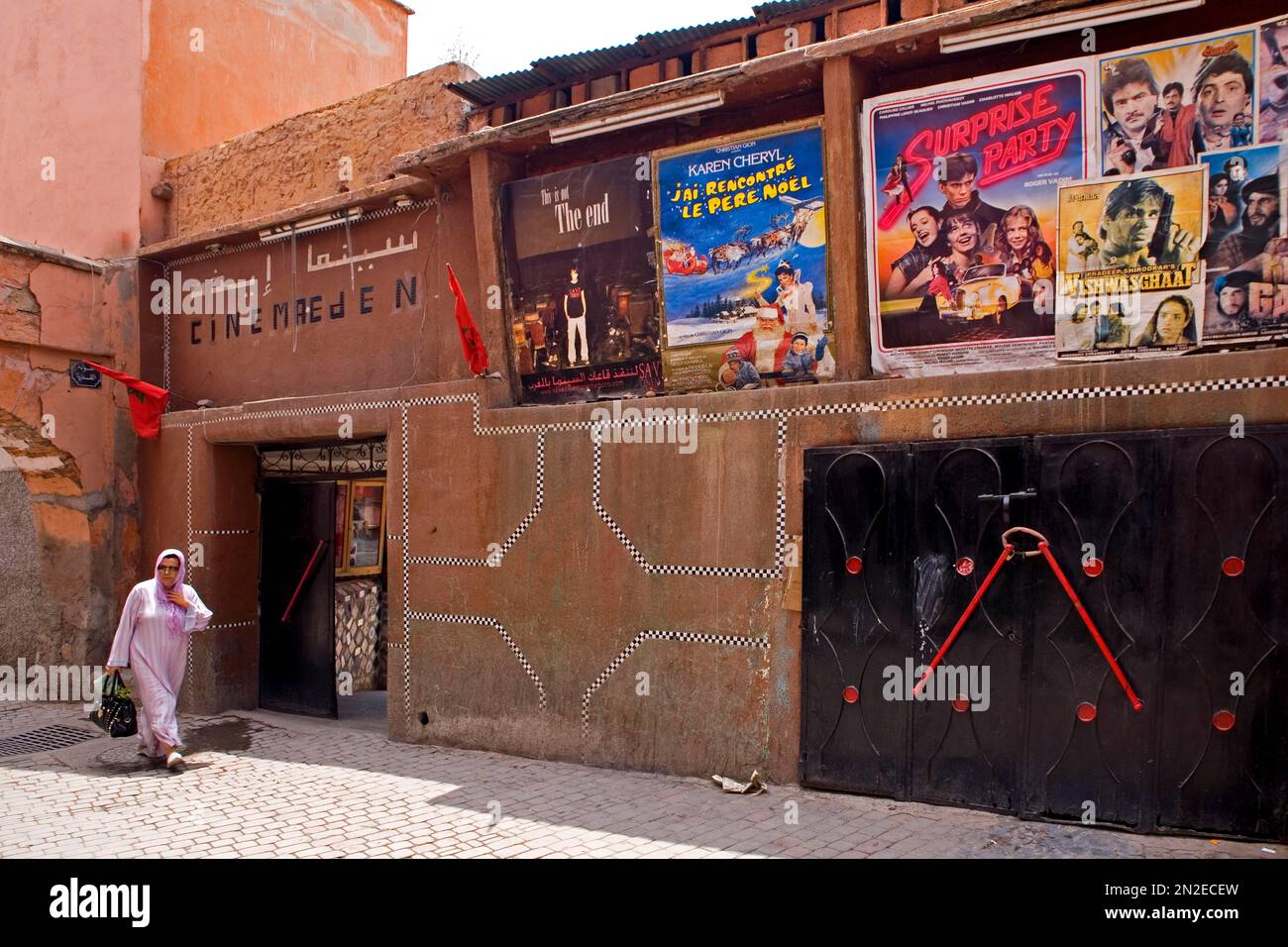
The "Hearing the Houma" article provides the material for this part of the argument by delving into the specific socio-sonic landscape of Morocco.
Hearing the Houma: Sound, Vision, and Urban Space in Moroccan ...
Let's return to 'Hearing the Houma.' This time, focus on the rich contextual detail the author uses, which demonstrates why a generic framework is insufficient.
Please read the section titled 'Contested Urban Pasts and Presents: Moroccan Hip-Hop and l-Houma.' Focus on the key Moroccan-specific concepts it introduces that your framework must be able to address: The colonial legacy of urban design ('urban apartheid'). The cultural significance of musical genres like Nass al-Ghiwane and Gnawa. The social importance of lhouma (the neighborhood) as a site of identity. The specific linguistic context (darija). This section demonstrates how to connect broad theories to on-the-ground cultural realities.
Your justification gains immense power when you argue that your framework is designed to analyze these very things. For example, you can state that the framework's cultural studies layer is not generic, but specifically geared to investigate how the sound design of a film represents the tensions between bled al-makhzen (urban state territory) and bled al-siba (rural resistance territory), or how the mixing of dialogue in Darija, French, and Amazigh languages reflects the social hierarchies of lhouma. This demonstrates that your framework is not just theoretically sound, but also empirically grounded in the realities of your subject.
2.4. Justification by Critical Stance: The Postcolonial Imperative
Finally, for a topic situated in North Africa, a powerful justification must address the politics of knowledge production itself. Your framework is not neutral; it must be positioned as a critical tool that actively works against historical patterns of misrepresentation.

This means justifying your framework as an explicit attempt to move beyond Orientalist tropes of the "exotic." It’s about whose sounds are heard, how they are represented, and who is doing the analysis.
Limbrick's proposal again provides the language for this. He asks: "...when we reject Orientalism... with what critical models should we then engage the diverse and vibrant historical phenomenon of Arab cinema?"
Your framework is your answer to that question. You can justify it as a tool designed to:
- Listen for sonic agency, analyzing how Moroccan filmmakers use sound to "assert cultural specificity and resist sonic homogenization" (Module 7).
- Deconstruct exoticism, by using the detailed vocabulary of soundscape analysis to move beyond vague descriptions of "market noise" and instead identify specific traditions like the halqa.
- Critique the 'lo-fi'/'hi-fi' binary, questioning whether Schafer's preference for 'hi-fi' (often rural) soundscapes carries a colonial-modernist bias against the dense, complex anthrophony of postcolonial urban centers like Casablanca. The analysis of hip-hop in "Hearing the Houma" is a perfect example of taking an urban, "lo-fi" soundscape seriously as a complex site of cultural production.
This final layer of justification elevates your methodology from a simple tool for analysis to a critical intervention in the field of film and sound studies.
Conclusion
Justifying your analytical framework is as important as the analysis itself. It demonstrates your mastery of the theoretical field and your conscious, deliberate approach to research design.
Key Takeaways:
- A framework justification is an argument you build for your dissertation committee, proving your approach is the most suitable one.
- A strong justification rests on several pillars:
- Necessity: The complexity of your topic (Moroccan cinema's polyphonic soundscapes) requires an integrated approach.
- Coherence: Your chosen theories (soundscape, film sound, cultural studies) compensate for each other's limitations and work together synergistically.
- Specificity: Your framework is precisely tuned to analyze unique Moroccan cultural concepts like lhouma, specific musical traditions, and linguistic diversity.
- Critical Stance: Your framework is a postcolonial tool, designed to actively critique Orientalist representations and listen for sonic agency.
Preview of the Next Lesson
Having constructed and justified your analytical framework, our next and final step in this module is to make it operational. In the next lesson, we will focus on how to design a systematic analytical protocol for studying soundscapes in a corpus of films. We will move from the "what" and "why" of your framework to the "how-to" of its practical application, creating a step-by-step guide for your actual analysis.