Hello! Welcome to the final lesson of the module, "Advanced Research Methodologies."
In our last session, we designed a systematic, multi-phase protocol for analyzing film soundscapes, moving from annotation to cultural interpretation. You now have a powerful engine for conducting your research. Today, we address the conscience of that engine.
The learning outcome for this lesson is to discuss the ethical considerations in representing and interpreting culturally specific soundscapes as a researcher. This isn't an appendix to your methodology; it's a foundational pillar. For a PhD focused on Moroccan cinema, engaging deeply with these questions is not optional—it is a prerequisite for producing responsible, rigorous, and meaningful scholarship. We will explore the power dynamics of representation, the imperative of self-reflection, and a concrete framework for conducting ethically sound research.
1. The Foundational Challenge: Representation and Power
Any time a researcher studies a culture, especially when there is a historical power imbalance (such as that between the West and postcolonial nations), the act of representation is fraught with ethical challenges. Postcolonial theory provides the critical language to understand this.
To begin, let's watch a brief introduction to the core ideas of postcolonial theory, which will frame our entire discussion.
Postcolonialism: WTF? An Intro to Postcolonial Theory
This video from the channel Tom Nicholas provides a clear overview of the key concepts that underpin the ethical challenges of cross-cultural research, namely 'Orientalism' and 'the Other'.
Please watch from the beginning until the timestamp 07:38. Focus on three key ideas: Postcolonialism's focus: How it explores the cultural legacy of colonialism. Edward Said's 'Orientalism': The argument that 'the West' has defined 'the East' on its own terms, creating a distorted representation. Gayatri Spivak's 'Othering': The process by which non-Western cultures are constituted as strange, exotic, or abnormal in contrast to a 'normal' West.
As the video explains, the core ethical problem is that research can inadvertently perpetuate colonial ways of seeing and knowing. A researcher, even with the best intentions, might:
- Exoticize: Frame the sounds of a Moroccan medina as "chaotic" or "mysterious," reinforcing Orientalist stereotypes.
- Silence: Focus on sounds that fit a preconceived narrative while ignoring others that are central to the community's own experience.
- Misinterpret: Apply Western theoretical concepts (like the hi-fi/lo-fi binary) without considering if they are relevant or meaningful in the local context.
This dynamic is part of a larger system of power and extraction that decolonial thought seeks to dismantle.
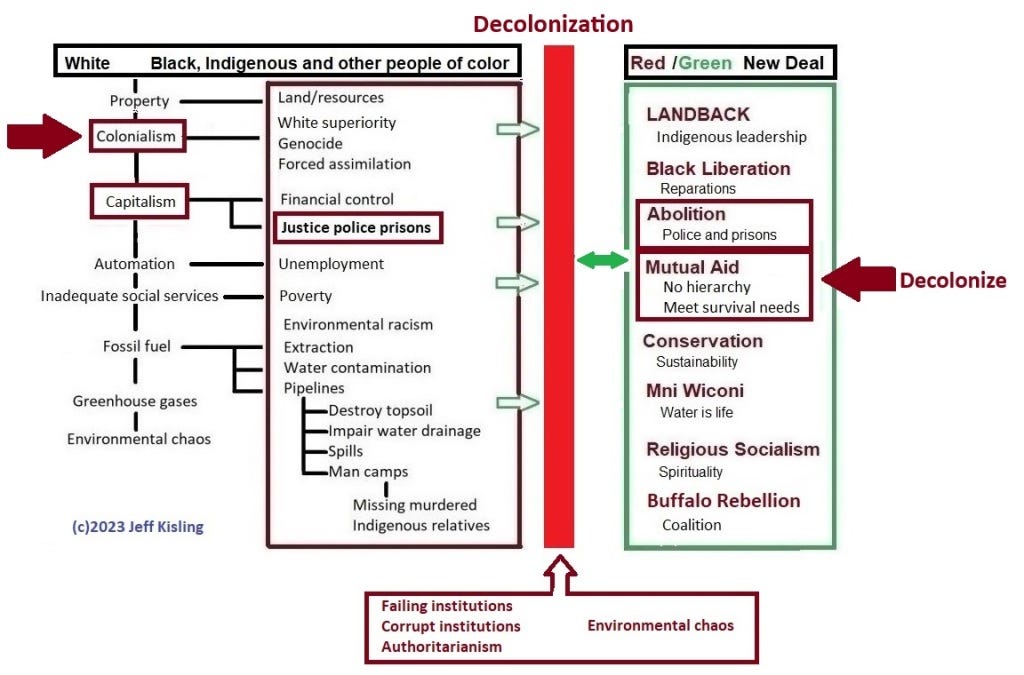
2. Learning from a Parallel Field: The Case of Ethnomusicology
The field of sound studies is not the first to grapple with these issues. Ethnomusicology—the study of people making music—has a long and complex history with the ethics of representation. Examining its evolution provides valuable lessons.
What is Applied Ethnomusicology & Why Did They Say so Many Terrible Things About it?
This lecture from the Library of Congress discusses the history of 'applied ethnomusicology' and the ethical debates that have shaped the field.
Please watch the following segments: 09:38 - 11:14: Note the definition of modern applied ethnomusicology, which is centered on community benefit, collaborative partnerships, and social responsibility. 36:51 - 41:47: Listen to the discussion of the historical distrust of 'applied' work. Pay attention to the fears of 'social engineering,' 'manipulating the destinies of people,' and the problematic legacy of researchers advising colonial or government bodies. 46:32 - 47:18: This short clip explains how the rise of postcolonial critique in the 1970s and 80s was crucial in shifting the field towards a more humanized, advocacy-based approach. This history shows a clear trajectory from a potentially extractive, top-down model to a collaborative, ethically-grounded one.
The key takeaway here is the shift in the researcher's role: from a detached observer who "extracts" cultural data to a collaborative partner who is accountable to the community they work with. This principle is central to decolonial research praxis.
3. A Framework for Decolonial Praxis in Sonic Research
So, how do we translate these broad principles into a concrete methodology for studying film soundscapes? The paper "Ethical Practice and Decolonial Praxis in Sonic Research" by Zinovieff, Droumeva, and Sepúlveda offers a direct answer. It argues that we must actively work to "unlink" from sound studies' own colonial legacy.
First, let's establish the theoretical grounding provided in the paper.
[PDF] Ethical Practice and Decolonial Praxis in Sonic Research
This paper is essential for your work. We will use it to build a practical ethical framework. First, let's understand the authors' critique of the field itself.
Please read the following two sections in the PDF (pages 5-9): 'DECOLONIALITY VS. DECOLONIZATION AND POSTCOLONIALITY': Focus on the distinction the authors draw. Decoloniality, emerging from a Latin American context, aims to unravel the entire 'colonial matrix of power' that shapes our thinking, being, and knowing. 'ORALITY AND THE CONSTRUCTION OF SOUTH...': This section is crucial. It argues that sound studies' foundational concepts (like the orality/literacy divide) are deeply entangled with a colonial worldview. The key point is that using sound as your focus is not automatically a decolonizing act; the field's own tools can carry colonial baggage.
Understanding this critique is vital. It forces us to be critical of our own methods. The paper's most significant contribution, however, is its proposal for a practical framework. The authors offer five "lenses" for operationalizing decoloniality in your research. This is your ethical toolkit.
[PDF] Ethical Practice and Decolonial Praxis in Sonic Research
Now for the core of our lesson. Please read the section that outlines the 'Speculative Sonic Framework for Decolonial Praxis.' This provides five concrete areas of focus for ensuring your research is ethically robust.
Please read the section titled 'SPECULATIVE SONIC FRAMEWORK FOR DECOLONIAL PRAXIS' (pages 14-17). As you read, focus on understanding the actionable questions behind each of the five lenses: Situating: Who are you in conversation with? What are the specific decolonial discourses relevant to Morocco vs. other regions? Positionality: How does your identity, background, and privilege act as a 'compass'? How does it grant or deny you access? Reflexive Iteration: How can you make ethical reflection an ongoing process throughout your research, not just a statement in your introduction? Relationality (Vincularidad): How can your research be a 'gathering' that engages with local conversations about justice, rather than a detached analysis? Accountability: To whom are you accountable? How can you build systems of support and unlearn colonial habits of 'arriving at' answers, instead focusing on 'questioning and searching'?
These five lenses transform ethics from a vague sentiment into a set of methodological principles that you can build directly into the analytical protocol we designed in the last lesson.

4. Ethical Interpretation in Practice: Sacred and Traumatic Soundscapes
Let's return to the article "Religious soundscapes and traumatic listening," which we used previously to model analytical methodology. Now, we can re-examine it through an ethical lens. The author is not just analyzing sounds in a film; they are interpreting sonic representations of deep historical trauma, religious ritual, and state-sanctioned silence in Malaysia.
This is a high-stakes interpretive act. Consider the ethical responsibility involved in analyzing:
- "Taboo sounds" (LINK, sec. 3): Sacred rituals not meant for the uninitiated.
- "Traumatic listening" (LINK, sec. 2, 5): The sonic experience of violence and the institutional silencing of victims.
- "Ghostly voices" (LINK, sec. 7): The sounds of the dead that haunt the living, resisting historical erasure.
The author engages these topics by proposing an "alternative ethics of listening" (LINK, sec. 9)—one that acknowledges trauma, resists easy closure, and witnesses silenced histories. This is what it means to apply a decolonial praxis. The analysis becomes more than an academic exercise; it becomes a political and ethical act of witnessing.
When you analyze a Moroccan film that touches on the Years of Lead (Années de Plomb), engages with sacred Gnawa rituals, or depicts the complexities of linguistic politics, you will face similar ethical demands. Your interpretation must be guided by the same principles of positionality, relationality, and accountability.
Conclusion
Moving from designing a protocol to considering its ethical application is the final, and most important, step in mastering advanced research methodology. Today's lesson demonstrates that ethical considerations are not a bureaucratic hurdle, but the very foundation of credible and impactful scholarship in a postcolonial world.
Key Takeaways:
- Representation is Power: Be aware that describing and interpreting a culture's soundscape is a political act that can either reinforce or challenge historical power dynamics.
- Positionality is Method: Critically examining your own standpoint and biases is not just an introductory paragraph; it is a central methodological tool that must be used throughout the research process.
- Adopt a Decolonial Praxis: Use a framework, like the five lenses (Situating, Positionality, Reflexive Iteration, Relationality, Accountability), to embed ethical principles into your research design.
- Handle with Care: Approach the interpretation of sacred, traumatic, or politically sensitive sounds with a heightened sense of ethical responsibility, recognizing your role as a witness and interpreter.
Preview of the Next Module
This lesson concludes our module on research methodologies. You are now equipped with an integrated theoretical framework, a practical analytical protocol, and a robust ethical compass.
Our next module, "Developing the PhD Proposal," puts all of this into action. We will begin with the most crucial task: Formulating a precise and viable research question. The work you have done here—especially in defining your ethical commitments—will ensure that the question you formulate is not only academically rigorous but also responsible, respectful, and poised to make a genuine contribution to the study of soundscapes in Moroccan cinema.