Hello! Welcome to our next lesson.
In the previous lessons, we've built up a picture of the Bayesian agent as a rational ideal. We saw how this agent uses probability to represent belief, conditionalization to update those beliefs, and how, in theory, a community of such agents might even converge on the truth.
However, any idealized model has its limits. This lesson confronts some of the most profound philosophical challenges to Bayesian epistemology. We will move beyond the practical issues we discussed last time (like the "long run" problem) to examine two fundamental, structural assumptions of the standard Bayesian framework that seem to place it at odds with how human beings—and even scientists—actually reason.
Our goal is to identify the philosophical limitations of Bayesian reasoning, specifically the problem of old evidence and logical omniscience. We'll see that these aren't just minor quibbles; they challenge the very claim of Bayesianism to be a comprehensive theory of rational belief change.
The Problem of Idealization
The core Bayesian norms describe a perfectly rational agent, not a real person. This idealization is a source of the framework's simplicity and power, but also its greatest vulnerability. Critics argue the norms are too demanding to be followed.
Let's begin by reading a brief overview of this "problem of idealization."
Bayesian epistemology - Stanford Encyclopedia of Philosophy
This excerpt from the Stanford Encyclopedia of Philosophy's entry on Bayesian Epistemology introduces the general worry that Bayesian norms are too demanding for humans. It highlights three key issues.
Please read section 1.9, 'Objections about Idealization'. Focus on the three reasons listed for why Bayesian norms are considered too demanding: Sharpness, Perfect Fit, and especially Logical Omniscience.
As the reading notes, these idealizations mean that ordinary humans are "pervasive counterexamples" to Bayesian norms. For this lesson, we will set aside the issues of sharpness and perfect fit to focus on the most philosophically troublesome of these idealizations: logical omniscience.
Limitation 1: The Problem of Logical Omniscience
The standard axioms of probability theory imply that any rational agent must assign a probability of 1 to all logical truths (e.g., "A or not-A") and a probability of 0 to all logical falsehoods. This is the requirement of logical omniscience.
What does this mean in practice? It means an ideal Bayesian agent instantly knows all the logical and mathematical consequences of their beliefs.
- If they believe a set of axioms, they must also believe all the theorems that follow from them.
- If they are considering a new scientific theory, they must immediately know everything that theory entails.
The problem here is obvious: this is not how minds work. A huge part of reasoning, in mathematics, science, and everyday life, consists of discovering these logical connections. The "aha!" moment when a mathematician proves a theorem or when a scientist realizes their theory predicts a surprising outcome is a genuine moment of learning. Yet, for a logically omniscient agent, such moments are impossible.
This issue is not just an acknowledged simplification; it creates a deep, and some would say unacceptable, asymmetry in the Bayesian framework.
[PDF] Old Evidence and Logical Omniscience in
The philosopher Daniel Garber wrote a classic paper on this topic. In this introduction, he frames the problem of logical omniscience not just as an idealization, but as the root cause of other major problems for Bayesianism and a philosophically 'absurd' asymmetry between empirical and logical knowledge.
Please read the text from the start of the paper up to the end of section I, 'The Problem of Old Evidence.' Focus on Garber's argument that logical omniscience is the real culprit behind the problem of old evidence and his point that 'It should be no more irrational to fail to know the least prime number greater than one million than it is to fail to know the number of volumes in the Library of Congress.'
As Garber argues, a framework that treats ignorance of empirical facts as normal but ignorance of logical facts as irrational seems fundamentally flawed. This flaw leads directly to our second major limitation.
Limitation 2: The Problem of Old Evidence
As Garber introduces, one of the most famous objections to the Bayesian account of confirmation is the problem of old evidence. Let's break it down.
The core of Bayesian confirmation is that evidence confirms hypothesis if observing increases your degree of belief in . Formally, .
But what happens if you already know with certainty before you even formulate ? If is "old evidence," your current probability for it is .
Let's look at Bayes' theorem:
If , and since cannot be greater than 1, the formula simplifies. Specifically, if we already know , conditionalizing on it does nothing. Since when , we get .
This means that old evidence cannot confirm a new theory.
This conclusion flies in the face of scientific history. The classic example is the confirmation of Einstein's General Theory of Relativity (GTR).
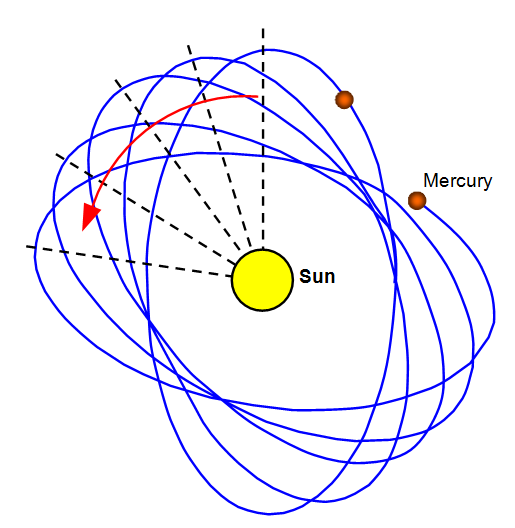
When Einstein formulated GTR in 1915, he was able to show that his theory precisely predicted the observed anomalous precession of Mercury's orbit. This was seen as a major triumph for GTR and a powerful piece of evidence in its favor. But the data about Mercury's orbit was "old evidence"—it had been known for over 50 years. According to a strict reading of Bayesian conditionalization, it should have provided zero confirmation for Einstein's new theory.
The Stanford Encyclopedia of Philosophy provides a concise summary of this very problem.
Bayesian epistemology - Stanford Encyclopedia of Philosophy
Let's return to the SEP article for a formal statement of the problem, using the Mercury example.
Please read section 1.8, 'Objections to Conditionalization'. Note how it frames the problem as a dilemma: the Principle of Conditionalization is either too weak (allowing arbitrary changes) or too strong (prohibiting legitimate changes, as in the Mercury case).
The Unifying Diagnosis: Logical Omniscience is the Culprit
The key insight, as Garber's paper argues, is that the problem of old evidence is a direct symptom of the problem of logical omniscience.
Why did the scientific community take GTR's success with Mercury's orbit as confirmation? The learning event wasn't re-observing the orbit. The learning event was the discovery of a logical/mathematical relationship: the discovery that GTR entails the correct value for the precession.
A logically omniscient agent would have known this entailment the instant GTR was formulated. For such an agent, there would be no "discovery" and no subsequent belief update. Their initial prior for GTR, , would have already accounted for the fact that it explains Mercury's orbit.
But for Einstein, and for the rest of the scientific community, this entailment was not obvious. It required difficult calculation and derivation. The confirmation came from learning the new proposition, "GTR entails the anomalous perihelion of Mercury." Standard Bayesianism has no room for learning such a proposition, because a logically omniscient agent already knows all entailments.
Sketching a Solution: A More Modest Bayesianism
If the problem is logical omniscience, the solution must involve relaxing this assumption. This is precisely the project undertaken by philosophers like Garber. The proposal is to move from a "global Bayesianism" (one probability function over all possible truths) to a "local Bayesianism."
In this local or "problem-relative" model:
- The agent works with a limited language relevant to the problem at hand.
- Logical statements, like "H entails E," can be treated as propositions in their own right, about which the agent can be uncertain.
- The agent can then learn this logical proposition and update their beliefs by conditionalizing on it.
So, in the Mercury case, Einstein's belief update would look like this:
where is the old evidence about Mercury's orbit. Because Einstein's prior probability for the logical claim "GTR entails E" was less than 1, learning that it is true can indeed boost his confidence in GTR, even if . This sophisticated move saves the phenomena of scientific reasoning by modeling the learning of logical, not just empirical, facts.
A Different Kind of Limit: Moral and Ethical Boundaries
So far, we've focused on the logical and epistemological limits of the Bayesian framework. But there's another question worth asking: even if the model were perfect, are there situations where we should not reason like a Bayesian?
Think more rationally with Bayes’ rule | Steven Pinker
In this clip, Steven Pinker discusses Bayes' rule and raises a fascinating challenge from outside of epistemology: sometimes, being a good statistician might conflict with being fair.
Watch the segment from 02:48 to 04:48. Pinker discusses the moral and political sensitivity of using certain 'Bayes rates' (priors or base rates). Consider how this applies to real-world decisions in areas like hiring, insurance, or criminal justice.
Pinker's point is a powerful one. Using base rates about group performance could lead to better statistical predictions, but it might also perpetuate vicious cycles of disadvantage and be fundamentally unfair to individuals. As a product manager, you can likely imagine how building models that rely on demographic priors could lead to biased or discriminatory outcomes in a SaaS product. This highlights a crucial tension between statistical optimization and ethical values, suggesting there are domains where we may deliberately choose not to be Bayesian.
Conclusion
This lesson has delved into some of the deepest challenges facing Bayesianism as a model of rationality. While the framework is elegant, its idealized assumptions create significant philosophical problems.
Key Takeaways:
- Logical Omniscience: The requirement that agents know all logical truths is a profound idealization that ignores a huge part of human reasoning: the discovery of logical and mathematical connections.
- The Problem of Old Evidence: A direct consequence of logical omniscience, this problem shows how the standard Bayesian model fails to account for landmark cases of scientific confirmation where new theories explain long-known facts.
- Proposed Solutions: A more sophisticated "local Bayesianism" attempts to solve these issues by allowing agents to be uncertain about and to learn logical propositions, not just empirical ones.
- Moral Limitations: Beyond logic, there are ethical reasons why we might choose not to apply Bayesian reasoning, especially when priors are based on sensitive group statistics that could lead to unfairness.
These limitations reveal the boundaries of a purely probabilistic epistemology. They suggest that to capture the full richness of human and scientific reasoning, we may need to augment the Bayesian toolkit.
This is the perfect transition to our next module. We will shift our focus from belief about statistical associations to reasoning about cause and effect. We'll find that moving from seeing to doing—from observation to intervention—requires a new set of concepts that go beyond what probability theory alone can provide. Our first step will be to explore how interventionist theories of causation sought to overcome the limits of prior philosophical accounts.