Hello! Welcome to the final lesson of our course on C pointers.
Throughout this course, we've journeyed from the fundamentals of memory and addresses to complex applications like function pointers, dynamic data structures, and the intricacies of MISRA-C compliance. In our last lesson, we mastered the precise buffer manipulation required to implement a circular buffer, a common pattern in your field of automotive systems.
Today, we bring everything together to focus on a crucial skill for your career advancement: explaining pointer-based solutions and their time/space complexity clearly in a technical interview setting. An interviewer isn't just looking for a correct answer; they want to understand your thought process, your grasp of performance trade-offs, and your ability to communicate complex ideas clearly. This lesson will equip you with a framework to do just that, ensuring you can confidently showcase the deep knowledge you've built.
1. The Interview Communication Framework
When an interviewer asks you to solve a problem using pointers, they are evaluating multiple skills simultaneously. Acing the question requires more than just writing functional code. A strong answer demonstrates a structured approach to problem-solving.
The following resource outlines a professional structure for answering technical questions. We will adopt this as our guiding framework.
Top 30 Most Common Interview Questions on Pointers in C ...
The article 'Top 30 Most Common Interview Questions on Pointers in C' provides an excellent, concise guide on how to structure answers during an interview. It breaks down the process into clear, actionable steps.
Read the section titled 'How should you structure answers to pointer questions during an interview?'. Focus on the 5-step suggested structure. This will be our template for the rest of the lesson.
Based on the resource, here is the framework we will practice:
- Clarify: Before writing any code, ask questions to understand the problem's constraints. What are the expected inputs? What are the bounds? Who is responsible for memory management?
- High-Level Idea / Diagram: Start with a high-level approach. For pointer problems, this is the perfect time to grab the virtual whiteboard. A simple diagram of memory, arrays, or linked list nodes can clarify your thinking immensely. You can start with a brute-force idea and then discuss how to optimize it.
- Write Code: Write clean, readable code, narrating your thought process as you go. Explain what each part of the code is doing.
- Walk Through & Edge Cases: Trace your code with a concrete example. Crucially, explicitly discuss edge cases: What happens with
NULLinput? An empty array/list? A single-element data structure? - State Complexity & Tests: Conclude by clearly stating the time and space complexity of your solution and briefly mentioning how you would test it.
The cornerstone of step 5 is a solid understanding of Big O notation. Let's do a quick, interview-focused refresher.
2. A Refresher on Time and Space Complexity
In your work, performance is measured in clock cycles and memory in bytes. In interviews, we abstract this using Big O notation to describe how an algorithm's resource usage scales with the size of the input, n.
The following video is an excellent primer on the most common complexities you'll encounter.
Big-O Notation - For Coding Interviews
The video 'Big-O Notation - For Coding Interviews' from the NeetCode channel is a pragmatic and visual guide to understanding complexity analysis in the context of interviews.
Watch the video from the beginning to the end. Pay close attention to the visual relationship between different complexity classes (e.g., O(log n) vs. O(n) vs. O(n²)) and the common algorithm patterns associated with each.
Key Complexities for Pointer-Based Problems
Here’s a summary of how those concepts apply to the data structures we've discussed:
| Complexity | Name | When You See It | Example |
|---|---|---|---|
| Time | |||
| Constant | Direct memory access, simple arithmetic. | Dereferencing a pointer, accessing an array element by index (arr[i]). |
|
| Logarithmic | Algorithms that repeatedly halve the input. | Binary search on a sorted array. | |
| Linear | Traversing all elements of a data structure once. | Iterating through a linked list, traversing an array with a single or two-pointer technique. | |
| Quadratic | Nested iteration over the same data. | A brute-force search for pairs in an array using nested loops. | |
| Space | |||
| Constant | The algorithm uses a fixed amount of extra memory. | In-place algorithms, like reversing a linked list or an array using only pointers. This is a major selling point. | |
| Linear | Extra memory usage grows with the input size. | Creating a complete copy of a linked list or array. |
Being able to say, "This is an in-place algorithm with space complexity," is a powerful statement in an interview.
3. Case Study 1: The Two-Pointer Technique
Let's apply our framework to a classic interview problem: "Given a sorted array of integers, find the first two numbers that add up to a target number."
This video walks through the exact thought process an interviewer wants to see, from brute-force to the optimal two-pointer solution.
Visual introduction Two Pointer Algorithm | Data Structure and Algorithm for Coding Interviews
The video 'Visual introduction Two Pointer Algorithm' from Josh's DevBox perfectly models how to approach a problem in an interview. It shows the progression from a naive solution to an optimal one.
Watch the video from the beginning up to 07:26. Notice how the presenters first clarify the problem, then discuss the brute-force (O(n²)) and binary search (O(n log n)) solutions before arriving at the optimal two-pointer approach.
Now, let's role-play how you would present this using our framework.
Applying the Framework: "Two Sum on Sorted Array"
Interviewer: "Given a sorted array, find two numbers that sum to a target."
You:
-
Clarify: "Okay. A few clarifying questions: The array is sorted, correct? Should I return the numbers themselves, or their indices? Are the indices 0-based or 1-based? Can there be duplicate numbers? What should I return if no such pair exists?"
-
High-Level Idea / Diagram: "My initial thought is a brute-force approach. I could use a nested loop to check every possible pair of numbers. This would work, but its time complexity would be . Since the array is sorted, we can definitely do better."
"A more optimized approach would be to use the two-pointer technique. I'll place one pointer at the beginning of the array and another at the end."
(Here you would draw on the whiteboard).

"I'll calculate the sum of the values at these two pointers.
*   If the sum equals the target, I've found my pair.
*   If the sum is less than the target, I need a larger sum, so I'll increment the left pointer.
*   If the sum is greater than the target, I need a smaller sum, so I'll decrement the right pointer.
I'll continue until the pointers meet or cross."
3. Write Code: (You would now write the C code, similar to what was shown in the video, explaining your logic).
```c
int* find_sum_pair(int arr[], int size, int target, int* result) {
    if (size < 2) {
        return NULL; // Cannot form a pair
    }

    int* left = arr;
    int* right = arr + size - 1;

    while (left < right) {
        int current_sum = *left + *right;

        if (current_sum == target) {
            result[0] = *left;
            result[1] = *right;
            return result;
        } else if (current_sum < target) {
            left++;
        } else { // current_sum > target
            right--;
        }
    }
    return NULL; // No pair found
}
```
4. Walk Through & Edge Cases: "For example, if the array is [2, 7, 11, 15] and the target is 9, left starts at 2 and right at 15. Their sum is 17, which is too high, so right moves to 11. The new sum is 13, still too high, so right moves to 7. The sum is now 9, which is our target. We've found the pair."
"For edge cases, I've handled an array with fewer than two elements by returning `NULL`. If no pair is found, the loop will complete when `left` and `right` cross, and I correctly return `NULL`."
5. State Complexity: "The time complexity of this solution is , because in the worst case, each pointer traverses the array only once. The space complexity is because I'm using a fixed number of variables for the pointers and not allocating any memory that scales with the input size. It's an efficient, in-place algorithm."
4. Case Study 2: Explaining Security Vulnerabilities
Your background in functional safety and robust systems like AUTOSAR gives you a unique advantage. You can elevate your answers by discussing the security and safety implications of pointer usage. A classic topic here is the buffer overflow.
The following resource is an excellent guide on how to visually and verbally explain a buffer overflow in an interview context.
How Can a Buffer Overflow Memory Diagram Win You ...
The article 'How Can a Buffer Overflow Memory Diagram Win You...' is specifically designed to help you communicate this complex topic during an interview. It emphasizes using diagrams to demonstrate a deep understanding of memory layout.
Read the following sections: 'What is a buffer overflow memory diagram...' 'How does the process memory layout connect...' 'How do stack and heap overflows differ...' 'How can you draw a clear buffer overflow memory diagram...' 'How would you explain buffer overflow...' 'How do common security mitigations appear...' Focus on the strategy of drawing the diagram and the structured three-part explanation pattern.
Applying the Framework: "Explain Buffer Overflow"
Interviewer: "Can you explain what a buffer overflow is and why it's dangerous?"
You:
-
Clarify: "Certainly. Are you more interested in a stack-based or a heap-based overflow? The stack-based overflow is a classic example that directly impacts a function's control flow, so I'll start there."
-
High-Level Idea / Diagram: "A buffer overflow occurs when a program writes data beyond the boundaries of a fixed-size buffer. To show why this is dangerous, let me first sketch the typical memory layout of a C process, and then zoom in on the stack."
(You draw on the whiteboard, first showing the high-level layout, then detailing a single stack frame).
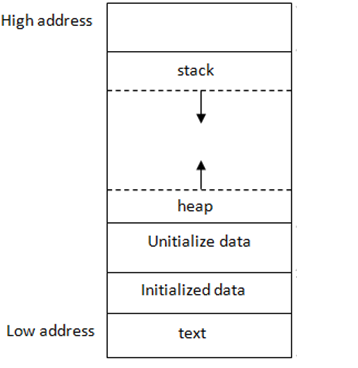
"Now, let's look at a specific function's stack frame. When a function is called, a block of memory is allocated on the stack. This 'stack frame' holds its local variables, and critically, the **return address**—the location of the code it needs to return to when it's done."

(You draw a diagram similar to the ASCII sketch in the resource, showing the buffer and the return address in adjacent memory).
3. Write Code (Conceptual): "Consider a vulnerable function like this:void process_data(char* user_input) { char buffer[16]; strcpy(buffer, user_input); }
The strcpy function doesn't check the size of user_input."
-
Walk Through & Impact: "If
user_inputis more than 15 characters,strcpywill keep writing past the end ofbuffer. Because the stack grows towards lower addresses, this overflow will first corrupt any other local variables, then the saved frame pointer, and eventually, it will overwrite the return address. An attacker can craft a malicious input string that overwrites this address with the address of their own code (shellcode). When the function tries toreturn, it will instead jump to the attacker's code, leading to arbitrary code execution. This is a critical security vulnerability." -
State Complexity / Mitigations: "This isn't an algorithmic complexity issue, but a security flaw. In my work with ISO 26262 and MISRA-C, preventing this is paramount. There are several layers of mitigation:
- In Code: Never use
strcpy. Use safer alternatives likestrncpyor, even better, functions that explicitly pass the destination buffer size. - Compiler/OS Level: Modern systems use multiple defenses. Stack canaries place a random value on the stack before the return address; if this value is changed by an overflow, the program aborts. ASLR (Address Space Layout Randomization) randomizes memory locations, making it harder for an attacker to know where to jump. DEP/NX (Data Execution Prevention) marks the stack as non-executable, preventing shellcode from running directly."
- In Code: Never use
This comprehensive answer demonstrates not just what a buffer overflow is, but why it matters and how to prevent it—showcasing your expertise in building robust, secure systems.
Conclusion
Congratulations on completing the course! We have traveled from the & and * operators to the complex pointer manipulations required for professional, safety-critical software.
Today's Key Takeaways:
- Structure is Key: A structured communication framework (Clarify -> Diagram -> Code -> Test -> Complexity) is essential for delivering clear and impressive interview answers.
- Complexity Matters: Being able to fluently state the time and space complexity of your solutions distinguishes you as a professional engineer who thinks about performance. In-place, space solutions are a key strength of pointer-based algorithms.
- Leverage Your Background: Connect pointer concepts to your deep experience in automotive systems, functional safety, and security. Explaining mitigations for vulnerabilities like buffer overflows demonstrates senior-level expertise.
Mastering pointers is an ongoing process of practice and application. The principles and patterns we've covered provide a strong foundation for your continued growth as a software engineer. We wish you the very best in all your future interviews and technical challenges.