Hej! Welcome to your first lesson in practical Swedish for your trip.
Today, our entire focus is on pronunciation, which is the foundation for being understood. We'll tackle the three special vowels in the Swedish alphabet that don't exist in English: å, ä, and ö. Mastering these sounds from the very beginning will give you a huge advantage and help you communicate more clearly and confidently when you're in Sweden.
These letters aren't just for show; they are in countless common words you'll use every day.
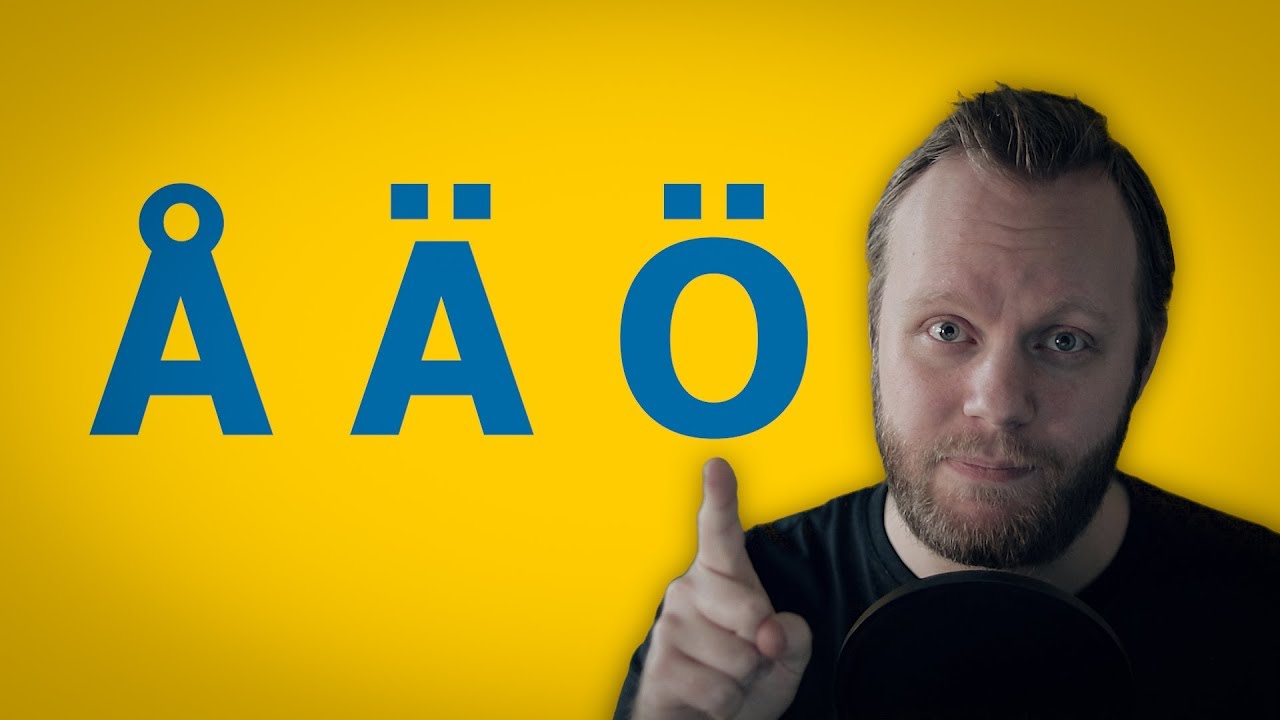
Let's dive in and get your mouth and ears accustomed to these new sounds.
1. The Vowel 'Å'
The first new vowel we'll learn is å.
- The Sound: It sounds very much like the "aw" in the English word "saw" or the "o" in "for" (but without pronouncing the 'r').
- How to Make It: To produce this sound, round your lips and drop your jaw as if you were about to sing a deep, resonant "ah" sound. It's a more open and deeper sound than you might be used to.
Practice Words
Try saying these useful Swedish words out loud. Don't worry about perfection yet; just focus on making that "aw" sound.
- på (pronounced "poh") - means "on"
- gå (pronounced "goh") - means "to go" or "to walk"
- tåg (pronounced "tawg") - means "train"
2. The Vowel 'Ä'
Next up is the vowel ä.
- The Sound: This one sounds like the "ai" in the English word "fair" or "air" (again, try to say it without the 'r' sound at the end).
- How to Make It: The trick to a good ä is the shape of your mouth. Your tongue should be forward, and you should spread your lips into a wider smile than you would for the English "eh" sound in "pet".
Practice Words
Let's try it with some words. Focus on keeping your tongue forward and your mouth wide.
- här (pronounced "hair") - means "here"
- är (pronounced "air") - means "is/am/are" (a very important one!)
- väder (pronounced "veh-der") - means "weather"
3. The Vowel 'Ö'
Finally, we have ö. This is often considered the most challenging of the three for English speakers because there isn't a direct equivalent.
- The Sound: It's a unique sound that combines two different mouth positions.
- How to Make It: Here's a great technique:
- First, get your tongue in position to say the English word "her" or "earn". Hold that position, but don't make the 'r' sound.
- Now, while keeping your tongue in that exact spot, round your lips tightly as if you were about to whistle or say "oo".
- The sound you produce from this combined position is the Swedish ö.
Practice Words
This one will feel strange at first, so practice it a few times.
- höra (pronounced roughly "heur-ah") - means "to hear"
- röd (pronounced "reud") - means "red"
- höger (pronounced "heu-ger") - means "right" (as in direction)
To reinforce what you've just practiced, let's turn to some reading. The following material will give you more tips and context on these important vowels.
Mastering Swedish Pronunciation & Swedish alphabet guide
These readings from 'Mastering Swedish Pronunciation' and 'Swedish alphabet guide' will help solidify your understanding of Å, Ä, and Ö. They offer great physical descriptions of how to form the sounds.
In the resource 'Mastering Swedish Pronunciation', please read the section titled 'The three additional vowels'. It begins just after the paragraph on the vowel 'Y' and ends just before the heading 'Hard versus soft vowels'. This section provides excellent English-language analogies for each sound.
Swedish alphabet guide: Master Å, Ä, and Ö letters
Now, let's get another perspective with more examples and techniques.
In this guide, please read the three short subsections under the main heading 'Mastering Å, Ä, and Ö'. They are titled 'Å: The deep vowel with historical weight', 'Ä: The fronted vowel that changes everything', and 'Ö: The rounded vowel without English equivalent'. These sections offer useful physical tips, like the 'singing position' for 'å' and the 'whistle while saying bed' trick for 'ö'.
Why Precision Matters
You might wonder if getting these sounds exactly right is important. It is! A small change in a vowel sound can completely change the meaning of a word.
For example, kär (using the ä sound) means "dear" or "in love." But if you mistakenly use the å sound, it becomes kår, which means "student union." That's a big difference!
This is great news for you. As a sales representative, you know how critical small nuances in communication can be. Applying that same attention to detail here will accelerate your learning.
Test your understanding!
This is a "say it out loud" exercise, not a written test. The goal is to train your mouth and ears. Read each pair of words aloud and focus on making the vowel sounds distinctly different.
-
hål (hole) vs. hall (hall)
- Focus on the deep, round å sound versus the flatter a sound.
-
rätt (correct) vs. ratt (steering wheel)
- Focus on the wide ä sound versus the flatter a sound.
-
för (for) vs. far (father)
- Focus on the rounded ö sound versus the open a sound.
Practicing pairs like this, known as "minimal pairs," is one of the fastest ways to master new sounds.
Conclusion
Fantastic work today! You've successfully taken on the three most distinctive sounds in the Swedish language. Getting comfortable with these is a fundamental first step that will make everything that follows much easier.
Key Takeaways:
- The Swedish alphabet has three extra vowels: å, ä, ö.
- å sounds like the "aw" in "saw". Make it with a deep, open, and round mouth.
- ä sounds like the "ai" in "fair". Make it with a wide mouth and forward tongue.
- ö is a unique combination: position your tongue to say "her" (without the 'r') and round your lips like you're whistling.
Keep practicing saying these sounds out loud whenever you have a spare moment.
Preview of the Next Lesson:
Now that you know the basic quality of these vowels, our next lesson will add another layer: vowel length. You'll learn that every Swedish vowel has both a long and a short version, and we'll explore the simple rules that tell you when to use each one. See you then